Our History:

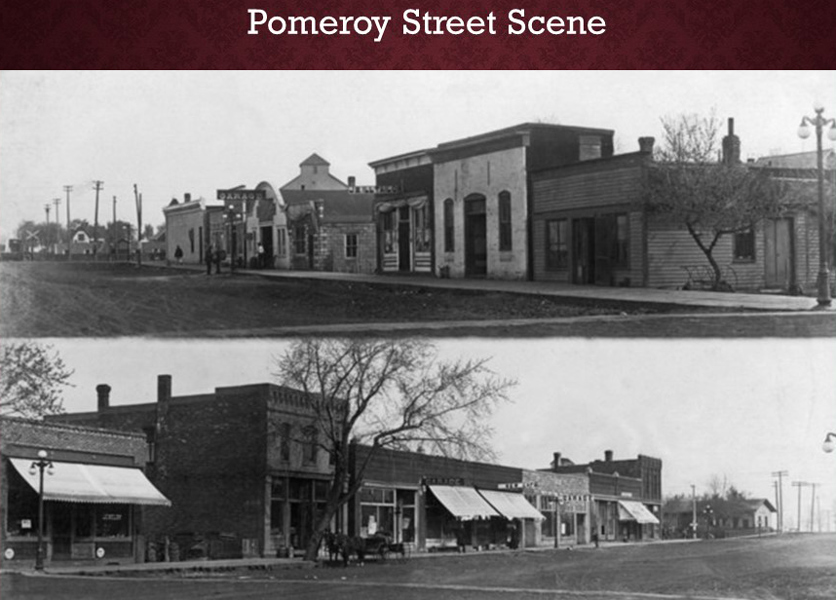
Pomeroy is a farm town founded in 1870. The town was named after Charles Pomeroy, the U.S. House Representative of Iowa’s sixth district at the time of the town’s creation and a prominent landowner. The railroad was the impotence of Pomeroy’s establishment and instrumental in its success. It bridged the gap between small rural towns and larger cities. The railroad would take passengers to Fort Dodge and haul cattle to Chicago. In Pomeroy’s infancy the beginnings of a fresh start were evident on every corner. New businesses, homes, and churches sprouted up from the rich flat prairies of Calhoun County, Iowa.

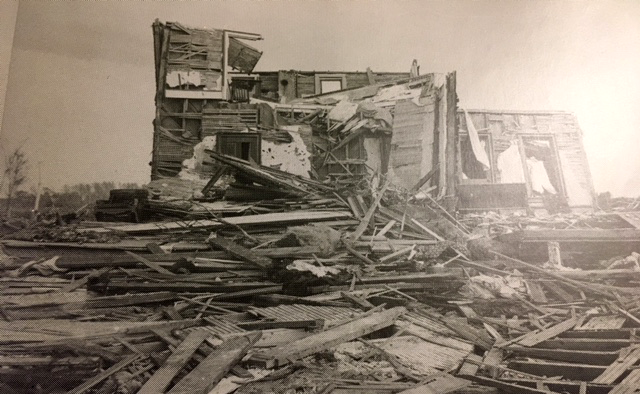
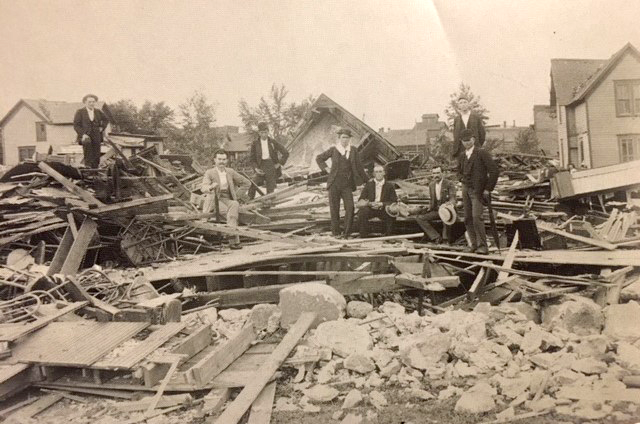
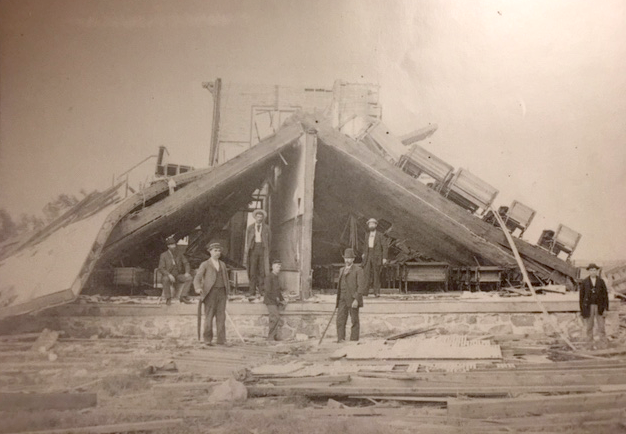
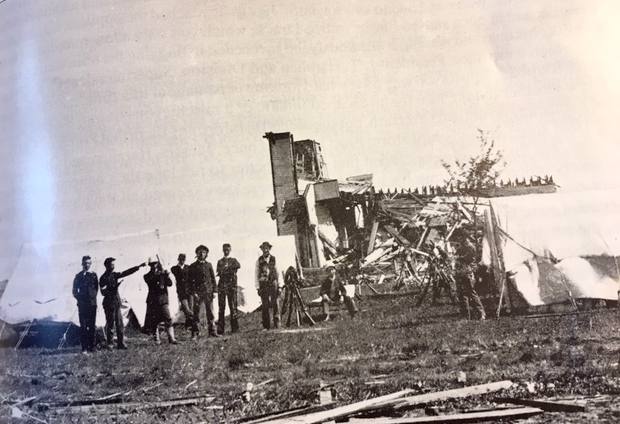
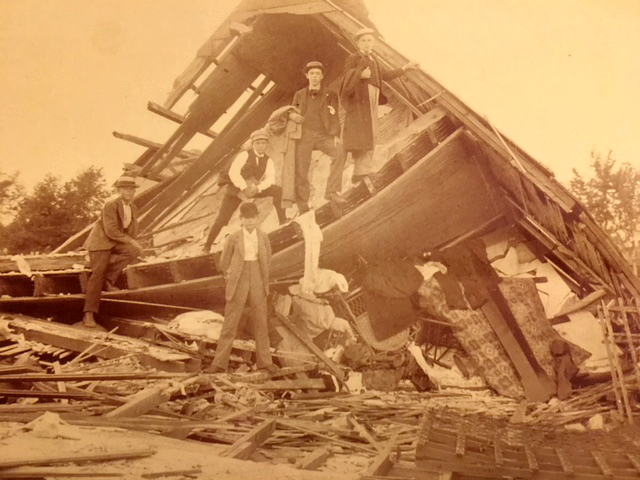
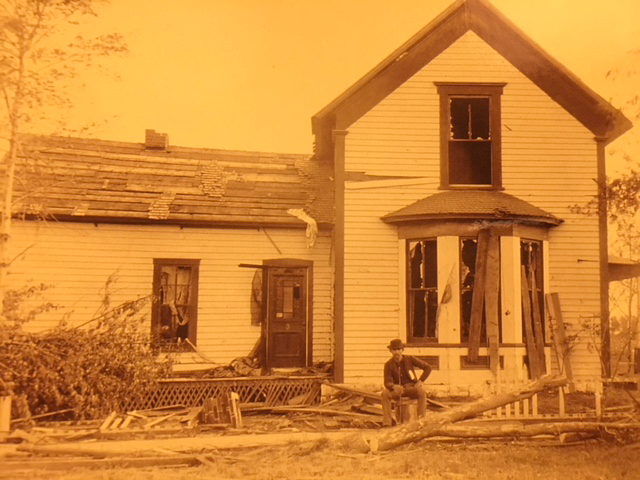
On a warm summer evening, July 6, 1893, a storm that would be remembered forever descended upon the town. An F5 tornado destroyed Pomeroy and several other communities, leaving in its wake 71 dead and many injured. With a damage path of 500 yards wide and 55 miles long, communities that surrounded the devastated area acted quickly to come to the aid of those oppressed by the storm. Eventually, the hustle and bustle of new growth sprang up from the ruins. Some families moved on, while others picked up the pieces and rebuilt. The cemeteries in and around Pomeroy have many tombstones that are dated July 6, 1893, or soon after. F. W. Spraue wrote a book about the tornado called The Story of a storm, copyrighted in 1893 and printed by The Henry O. Shepard Company of Chicago.

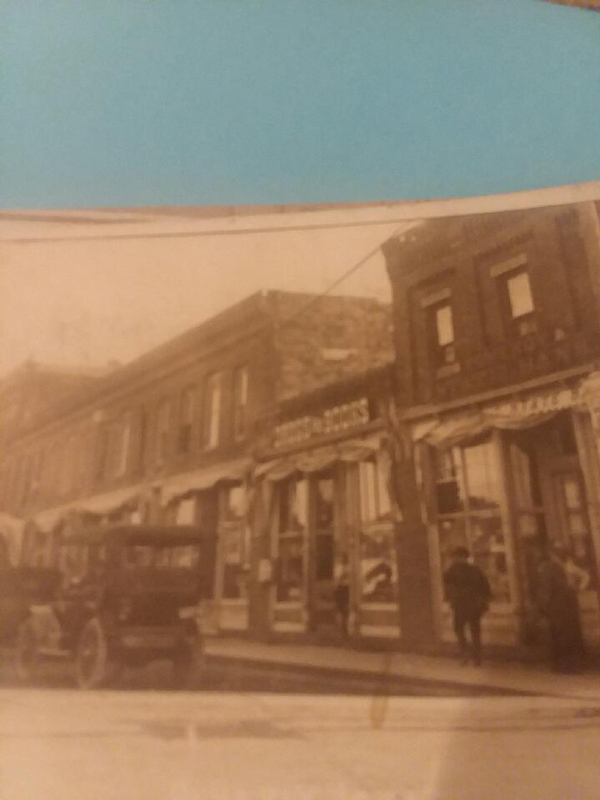
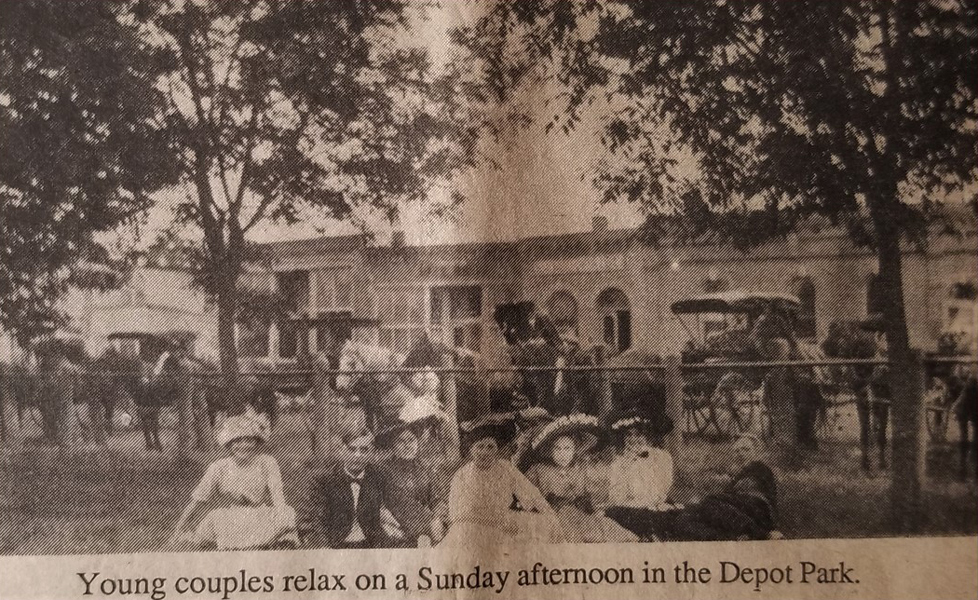
Pomeroy showed resilience, and by the early 1900’s the population was 910 people. In 1913, the town received electricity for the first time from the Northern Iowa Power Company. The lights in town would push Pomeroy into a new era. In 1921, the dirt roads in town were paved keeping up with the pace of the automobile. Horse and buggy made way for the more convenient and modern form of travel. The horse watering trough located downtown is a keepsake from Pomeroy’s first era. Several gas stations would go on to thrive in Pomeroy over the years.

At the town’s busiest, there were about 50 businesses, one public school, and two parochial schools – Lutheran and Catholic. Additionally, Pomeroy had a beautiful Legion Hall, capable of holding wedding receptions and numerous family gatherings. Legion Day was a local celebration in Pomeroy, complete with rides, hometown food stands, and an ice cream social. At one time two Doctors practiced medicine in town: Dr Weber and Doctor Taylor. Doctor Taylor’s office is still standing across from the bank. Receiving a free ice cream at the drugstore after visiting the doctor or reading comics in the store windows are memories past residents like to reflect on. There were also two banks, two barbershops, several beauty parlors and a nice post office. The business district included a hotel, women’s and men’s clothing stores, butcher shop, drugstore, blacksmith, and several grocery stores. Pomeroy also had two lumber stores and a stockyard. Almost everything you needed; Pomeroy was able to provide. However, as years went by, more and more of the buildings were slowly taken down due to deterioration. In some cases, new buildings were built to “take their place”. In other instances, parks were created in the absence of a building. In 2022 a group of buildings on west Main Street were experiencing severe deterioration. At the time, the only one housing a business was Byron’s. Because the city council didn’t want to lose a business, they sold the Community Building to Byron and the 1893 Block of attached brick buildings and the Pomeroy State Bank were demolished in 2025. 

Pomeroy historically has had no shortage of faith, being home to nearly a dozen churches over its 125-year history. Several churches were destroyed in the 1893 cyclone and never rebuilt, while others were destroyed and rebuilt. Several of the town’s churches held entire services in the German, Swedish, or Latin language well into the first half of the twentieth century. A stark reminder of the diverse cultural landscape rural America was created from. In 2009 the United Church of Christ closed its doors, and the brick building was later torn down. The Methodist Church closed in ……… and was also torn down shortly after.  St. Mary Catholic Church consolidated with St. Thomas in Manson in 2017. As of 2026, St. John Lutheran and Immanuel Lutheran located in Pomeroy, and Elfsborg Lutheran and Evangelical Covenant Church both located north of Pomeroy, are still active amongst the Pomeroy community. In 2026 the St. Mary Catholic Church building was purchased by the City of Pomeroy and became the new home of the Pomeroy City Hall and Public Library as well as a small event gathering space for the community. 

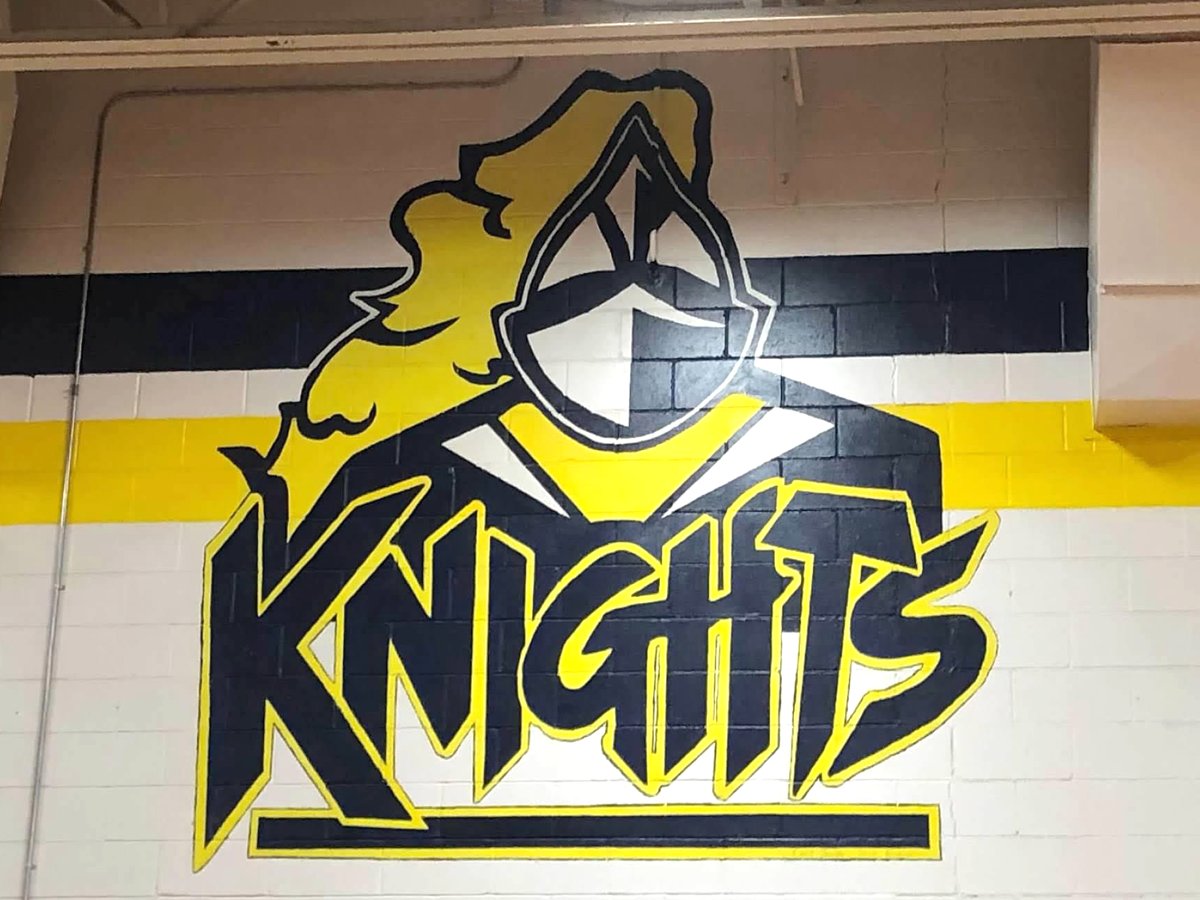
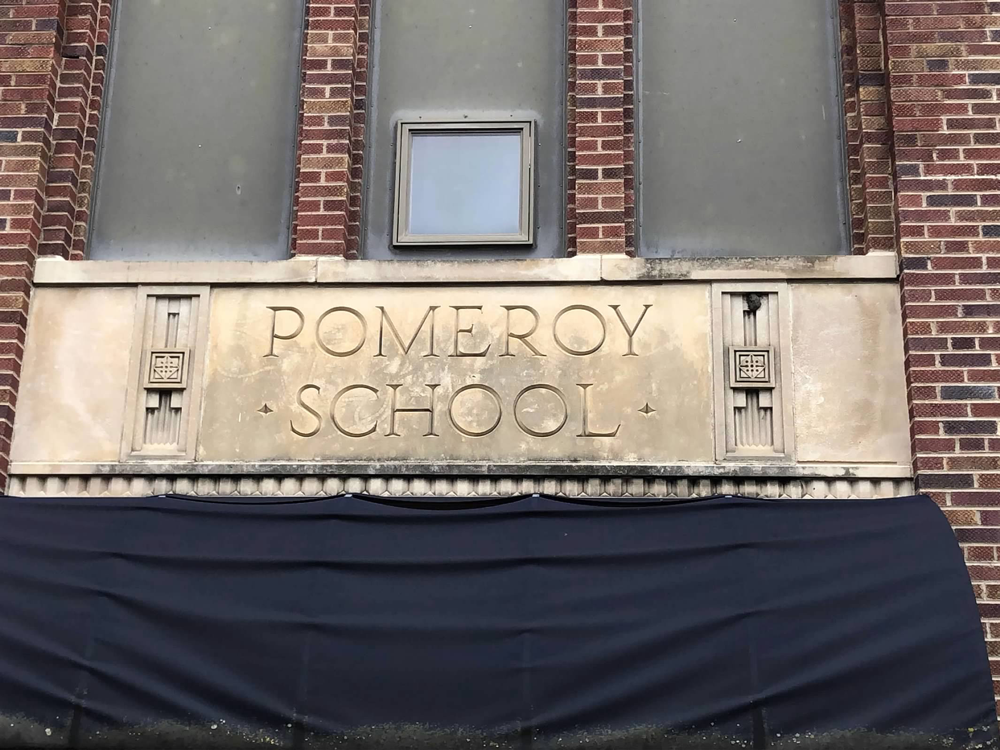
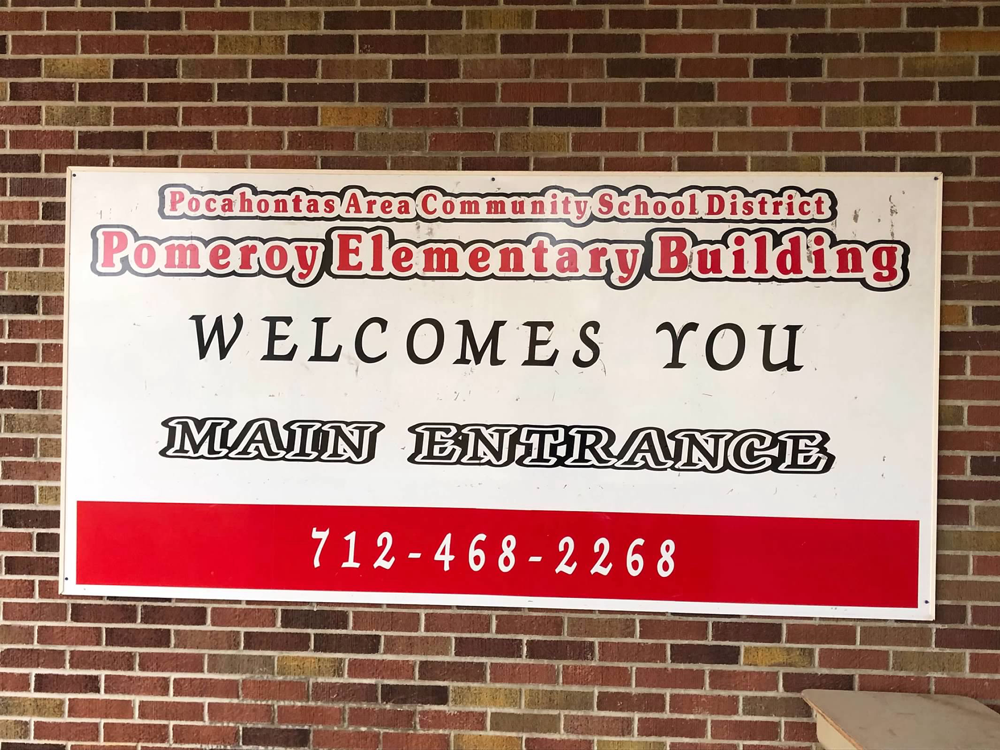
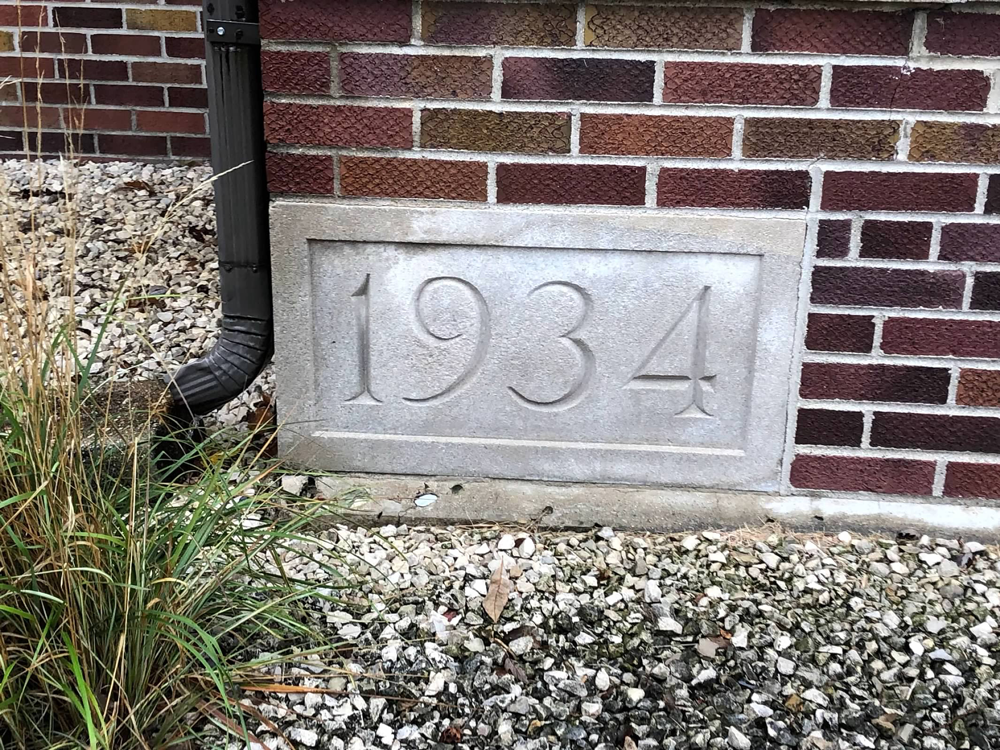
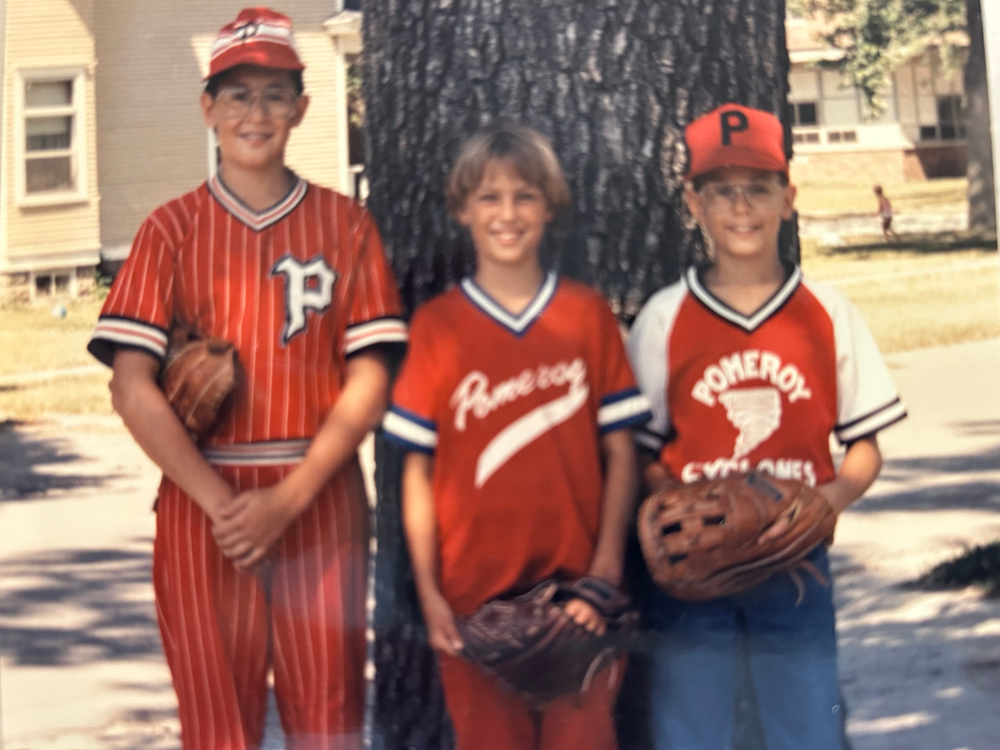
Several schoolhouses were dedicated in Pomeroy over the years. Initially, there was a wooden schoolhouse, with the brick Pomeroy school building opening in 1935. The athletic teams were known as the Pomeroy Cyclones, in homage to the town’s history. Many smiling faces and memories were witnessed in this building. In 1955, a lunchroom and band room with instrument storage and small practice rooms were added to the school building. In 1975 an art room, a shop addition and a new, larger gymnasium was added to the school building. In 1990, Pomeroy consolidated with neighboring town Palmer to create the Pomeroy-Palmer Knights. Both towns harbored a rich basketball tradition, leading to three Class 1A Boys Basketball State Championships in 1994, 2001, and 2002. Basketball would serve as a main source of town pride for many years. In 2012, Pomeroy-Palmer consolidated with the larger Pocahontas Area Community School District (PAC) to the North. Although the Pomeroy-Palmer school building in Pomeroy was used for several years while renovations were being made at PAC, once the renovations were completed, the Pomeroy building was used sparingly for community functions. Because efforts to sell the building to a developer proved to be fruitless, demolition of the building began in the summer of 2025. In one final effort, Pomeroy’s mayor and city council met jointly with the PAC school board, superintendent and representatives of the demolition company. The decision was made to give the City of Pomeroy what was left of the newer gymnasium and the two blocks of land where the school and the playground had been located. A community effort to renovate this gymnasium into a large event/recreation center with a trophy room, a kitchen/dining area and bathrooms began.

During the 1960s to 1980’s, activity in Pomeroy was best summarized as town and country working together. Progress in a small town begins with the people who live there. There is no better example of this than the Town and Country Boosters and Pomeroy Development Corp., two groups which spearheaded multiple projects during this time frame. The Town and Country Boosters, along with the $12,000 raised by the 1970 Centennial Committee provided the means to build a community hall in 1975. This building was then generously donated to the city for rental scheduling and maintenance. Due to the efforts of the Pomeroy Development Corp., the Pomeroy Mini-Mall was built in the early 1970’s and housed various businesses over the years. The Pomeroy Development Corp. designed and funded the Pomeroy Care Center – built in 1973 – thanks to donations from 40 individuals. A few years later, again with the help of donations, an assisted-living facility was added onto the building. The facility was sold to Accura in 2016 but is still functioning today and providing a service that many small towns no longer have. 

Despite the efforts of good people, Pomeroy has been facing population decline since the farm crisis of the 1980’s.

Many famous people have walked the main street of Pomeroy. Gordon Prange, a historian who traveled with General Douglas McArthur during World War II, has had several books and movies documenting his writings. Byron’s, the local bar in town, comes alive with local and international talents – hosting names like Todd Snider, and Canned Heat. Bands have been known to occupy his establishment on Sunday afternoons as well as a street dance during the summer. Adjacent to Byron’s is the Pomeroy Community Area Veteran’s Park which was renovated after the previous park, with names engraved on bricks were worn from Iowa weather, was rededicated in July 2021. This new park proclaims the history of more than 700 area veterans.

On the other side of the railroad tracks is the NEW Cooperative Grain Elevator. The largest employer in town, NEW Cooperative continues to expand the Pomeroy location, adding a feed mill and agronomy shed within the past few years to keep business flowing in and out of town.

In 2016, 69 individuals pooled their $1,000 shares together to create a new restaurant in town, the CO-OP Bar & Grill. This type of small-town pride and thinking outside the box captured the attention of different media outlets. The selflessness and hard work of many proved successful, as the CO-OP is still open today. It has become a popular stop for many around the area.

The Pomeroy Historical Society is located in the former First National Bank, also known as the former Mutual Insurance Building. The building has been listed on the National Register of Historical Places since 2023. The Historical Society is working to bring the building back to its original beauty. It will help preserve Pomeroy history and display numerous photos, artifacts, and memorabilia from throughout the town’s life. The Historical Society has preserved the printings of The Pomeroy Herald in its archives. To find this newspaper link go to:  https://pomeroy.advantage-preservation.com.  

Today, Pomeroy remains a testament to resilience and community spirit, with fewer – but mightier – local establishments helping to sustain the town’s social fabric. Whether we welcome you for a day, or a lifetime, we hope you take some time to come and enjoy our little town!

A Look At Pomeroy's Past

First National Bank of Pomeroy Building Fundraiser Video

Close Search Window